HELLAH HORRAH: THE MYTHOLOGICAL HORROR ORACLE Descent into : Candyman
Tarot Card: Judgement
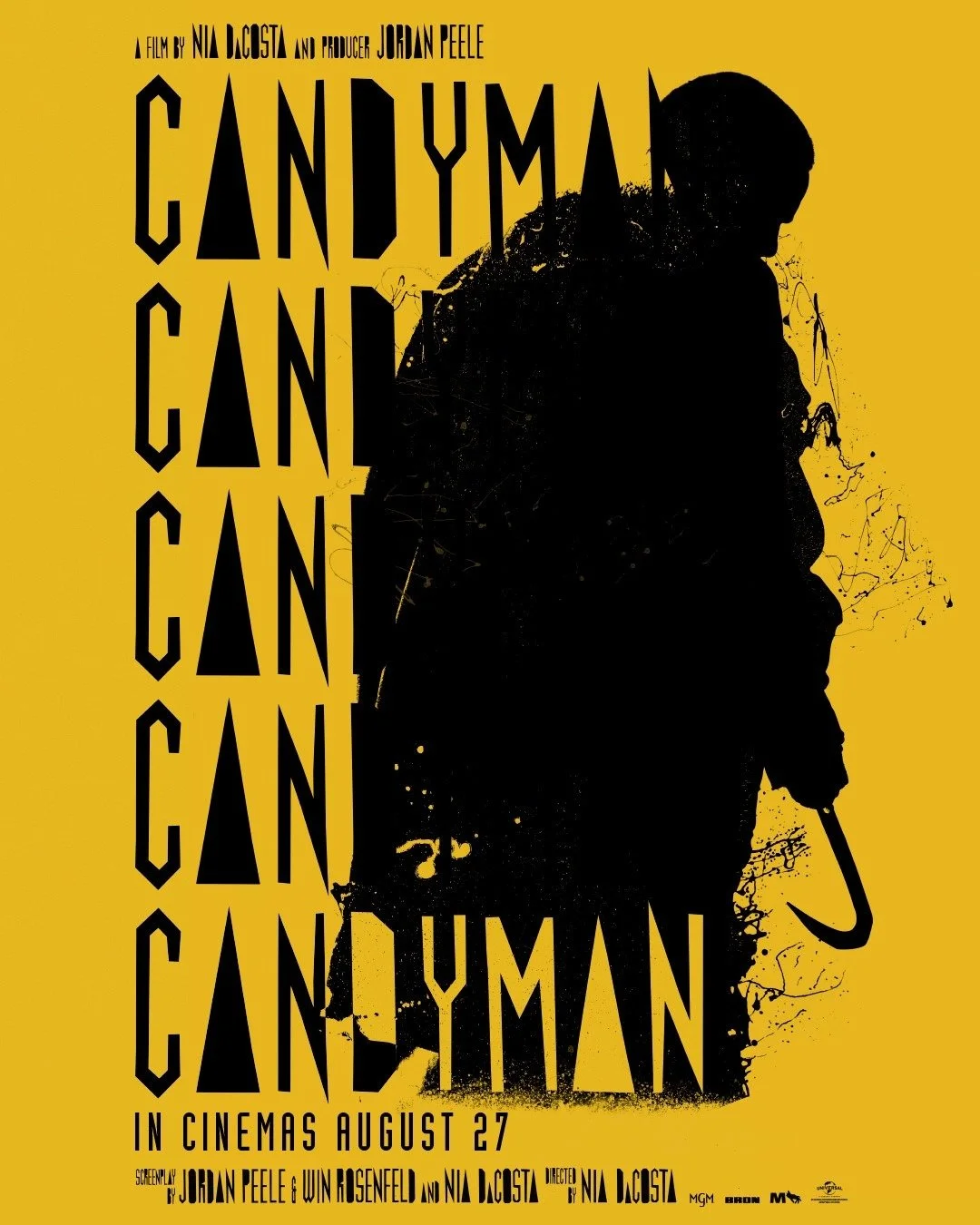
The newest Candyman doesn’t haunt you.
It turns the mirror on to you.
This isn’t a sequel so much as a living archive. A contemporary art exhibition disguised as a horror film. It understands that the myth has evolved. The monster no longer needs to appear everywhere. He needs to appear where attention already is.
Enter Yahya Abdul-Mateen II.
We’ve seen him polished.
Hero-coded.
Myth-adjacent already.
With Wonder Man, he’s positioned as spectacle of strength, charisma, narrative control. A man meant to be looked at, admired, framed inside power fantasy. That role carries light. Accessibility. A promise of rescue.
Candyman does the opposite.
Here, Yahya’s body becomes a site.
A gallery wall.
A threshold.
Anthony McCoy isn’t possessed, he’s activated. The transformation is slow, conceptual, almost academic. This is horror as research. Trauma as methodology. His artist practice mirrors his descent: repetition, fixation, recontextualization. He doesn’t summon Candyman for thrills. He summons him for meaning.
And that’s the shift.
In 1992, Candyman needed belief.
In 2021, Candyman needs visibility.
This film understands contemporary art’s obsession with authorship, citation, and legacy. Anthony isn’t losing himself, he’s being absorbed into a lineage. The myth doesn’t erase him; it uses him. That’s the terror. The question isn’t “Is Candyman real?” It’s “Who gets remembered when violence becomes aesthetic?”
Judgement card energy is everywhere.
Judgement asks us to look at what has been buried and decide what rises. This Candyman isn’t about punishment, it’s about recognition through repetition. Every saying of the name is a citation. Every mirror is a museum wall. Every body is a footnote in an unfinished history.
Candyman demands the bill be paid.
Yahya’s brilliance is that he lets us see the hinge between those worlds. Between myth-as-empowerment and myth-as-burden. Between hero narratives that protect the body and horror narratives that consume it. His performance asks a brutal question:
What happens when Black mythology is only allowed to exist through trauma?
The answer isn’t subtle.
The answer is bees.
Oracle reading for the present moment:
Naming is not neutral
Visibility is not safety
Representation without control becomes sacrifice
Art can summon what it critiques
This Candyman scares because it doesn’t let the audience off the hook. You don’t leave cleansed. You leave implicated. You said the name by watching. You participated by witnessing. The mirror didn’t crack, it held.
Final Hellah invocation:
Some myths are warnings.
Some are memorials.
Some are instructions.
Be careful what you elevate.
Be careful what you repeat.
Be careful who gets to survive the story.
— Hellah 🖤