Hellah Horrah’s Midnight Chronicles: From Dusk Till Damn, Quentin
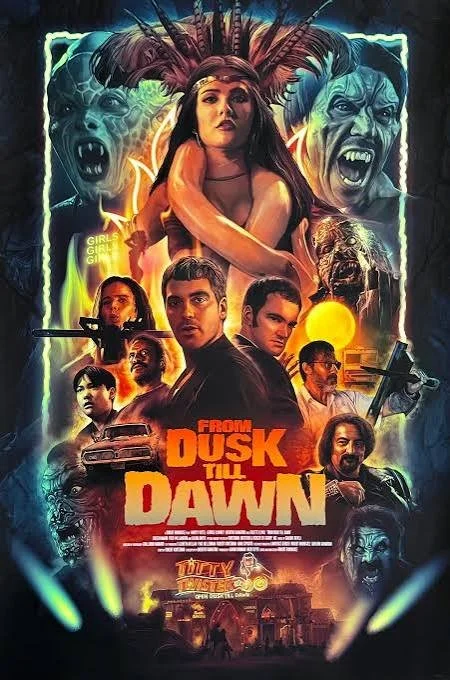
There are certain films that don’t just play—they possess you. They slide under your skin, rearrange your sense of logic, and whisper, “You’re mine now.” For me, From Dusk Till Dawn was one of those cinematic hauntings.
It began like a crime story—two brothers on the run, smoke curling from the barrel of every bad decision they’ve ever made. And then—because this is Quentin Tarantino’s world—reality split down the middle like a desert mirage. Out spilled blood, tequila, and chaos.
I admire Tarantino’s tenacity, truly. He creates with the fearlessness of someone who’s already been cursed and decided to dance anyway. His films aren’t about logic—they’re about rhythm. Pulse. He builds worlds that shouldn’t make sense but somehow do, because he wills them to. Watching his madness from a distance feels like watching lightning from a safe place: you’re in awe, but you know better than to get too close.
And yet, I can’t help but linger in the glow. There’s something hypnotic about Clooney’s calm against Quentin’s manic storm—two forces colliding until the screen erupts into fangs and fire. The moment Salma Hayek slithers onto that stage, you realize: you’re no longer in a movie. You’re in a fever dream directed by chaos itself.
But that’s the thing about horror—it’s not just about monsters or blood. It’s about surrender. From Dusk Till Dawn taught me that the most terrifying, intoxicating stories live where genres collide—where the crime scene meets the crypt, and the living become legend.
I watch it again and again, not for comfort, but for communion. Each time the desert opens and closes, I feel the same pull—to drive toward the edge of reason and stay there awhile. To honor the madness that makes the art, and the art that makes the madness.
So here’s to Quentin.
The architect of anarchy, the poet of pulp.
You made horror seductive, and chaos cinematic.
🩸 Forever yours in the dark,
Hellah Horrah, Mistress of the Night