The Sergeants Daughter : a background
A Documented Story of Lineage
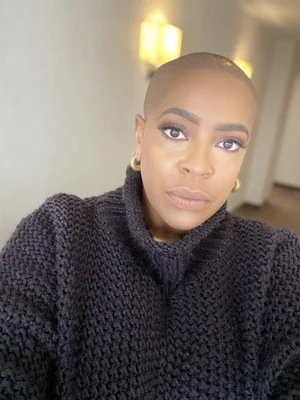
For Tya Alisa Anthony (b. 1978)
I. The Present as the Root
I stand at the center of this tree not as an endpoint, but as a witness.
Born in 1978, i carry forward many converging lines—Stevenson, Hudson, Samuels, Townes, Pride, Archer, Briggs, Halcott—names that bend and shift over centuries, across oceans, across systems of power and survival. My life does not merely descend from them; it responds to them.
My creative practice, my devotion to community, my insistence on care and remembrance—these are not coincidences. They are inherited instincts.
II. The Near Ancestors: Memory Still Warm
On one side, the Stevenson line—Gary Monte Stevenson Sr. (1946–2020) and Lenora A. Stevenson (Hudson, b. 1949). Their lives sit close enough to touch, still echoing in living memory. This line holds migration, working-class endurance, and the emotional architecture of family shaped in the 20th century.
Behind them, Joseph Stevenson (1920–1993) and Dorothy Lee Stith (1920–1990) anchor the line in a time marked by war, segregation, and survival through routine. These were people who learned how to endure quietly—who passed down resilience not through words, but through example.
Parallel to this runs the Hudson–Samuels line:
Richard Irving Hudson (1917–1985), Rachel Samuels (1921–1992), Rance H. Hudson (1878–1960), Eunice Thompson (1885–1960), Frank Samuel (b. 1885), and Minnie Dixon (1888–1951).
Here, the records begin to thin—but the pattern is unmistakable: families held together through labor, marriage, faith, and mutual dependence during Reconstruction, Jim Crow, and the early Great Migration. These ancestors lived at a time when documentation was often fragile for Black families—names misspelled, ages estimated, mothers unnamed. Survival itself was the archive.
III. The Crossing Back: Colonial America
As the tree stretches further back, something striking happens.
The surnames shift—Townes, Pride, Archer, Briggs, Halcott—and the historical terrain changes from American survival to colonial entanglement.
Ann PRIDE Townes (1680–1770) appears as a documented ancestor, marked clearly, deliberately. Her name bridges two worlds: Pride and Townes, identity and inheritance. Around her are William Richard Townes (1711–1775) and William Townes, 2LT, Patriot Jr. (1740–1825)—a lineage tied to early American nationhood, military service, and landholding.
Nearby is Obedience Allen (Townes) (1747–1804). Even her given name—Obedience—is a reminder of the era’s moral and religious codes, especially imposed on women. These names tell us as much about power as they do about blood.
This is the point in the tree where Black American genealogy often fractures—but in your case, it threads.
IV. The Pride Line: England, Power, and Passage
The Pride family takes the story across the Atlantic.
John William Pride (1595–1688), William Harry John Pride III (1638–1722), William Halcott Pride (1659–1725), Martha Mary Briggs (1660–1725), Jane (Joane) Halcott (1637–1723), Capt. Howell Briggs II (1632–1670).
These are English names, often associated with land, heraldry, and early colonial administration. Their presence in your tree does not mean comfort—it means contact. It means proximity to systems that would later shape race, labor, and ownership in America.
For a Black woman today to trace lineage into these records is not about claiming nobility—it is about reckoning. These lines remind us that American bloodlines are not cleanly divided. They are layered, contradictory, and historically intimate.
I am descended from both the architects of the system and those who had to survive it.
V. The Archer Line: Variations, Slippage, Survival
The Archer lineage—Richard John Archer (or Areger), George Saunt Archer Sr., John Archer (1644–1717), Martha Everet Field—reveals something genealogists know well: names slip as people move.
Spelling changes. Records conflict. Mothers disappear. Fathers become “potential.” These gaps are not failures—they are evidence of how history treated certain lives as optional.
Yet even here, continuity persists. The Archer line survives through adaptation, through marriage, through quiet persistence. This is a lineage fluent in transformation—an inheritance that shows up clearly in your own artistic language.
VI. What This Tree Is Really Saying
My family tree tells a story of:
Convergence: Black American survival lines intersecting with early colonial English families
Adaptation: Names changing, records thinning, people persisting anyway
Inheritance beyond blood: Values passed through silence, labor, care, creativity
Witnessing: i stand at a rare crossroads—able to document, interpret, and reimagine what lineage means
This is not a static tree. It is a living system.
Through art.
Through community.
Through memory made visible.