In the Studio: Learning to Listen Before I Compose
These collages feel different from my previous work. I am beginning to realize that I am no longer collecting images simply because they are beautiful or historically interesting. I am collecting evidence. Fragments. Conversations that have somehow found each other across continents, centuries, and disciplines. I haven’t fully decided what each piece wants to become, but I trust that uncertainty. It reminds me that my job is not always to know the answer. Sometimes my job is simply to notice.
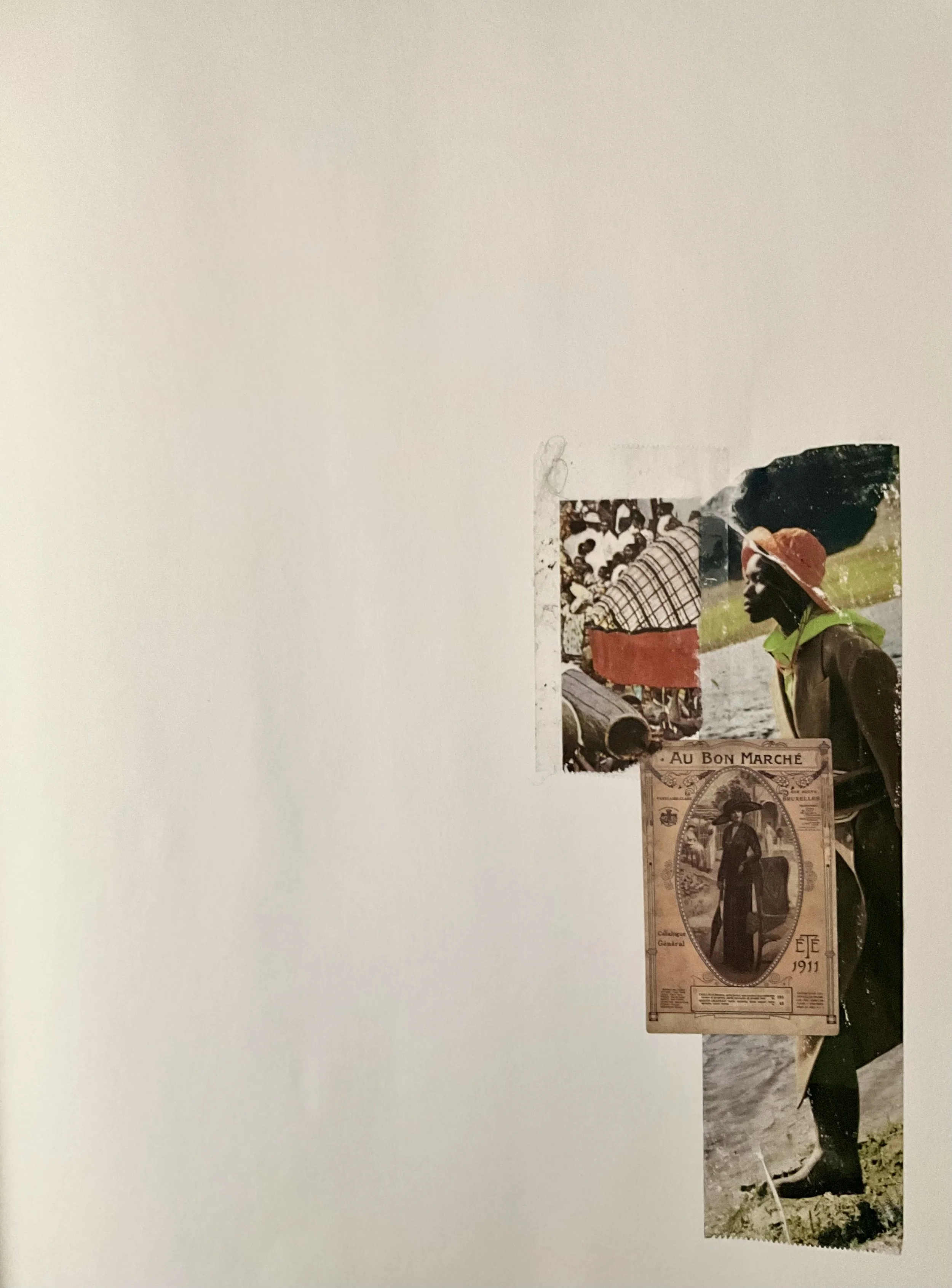
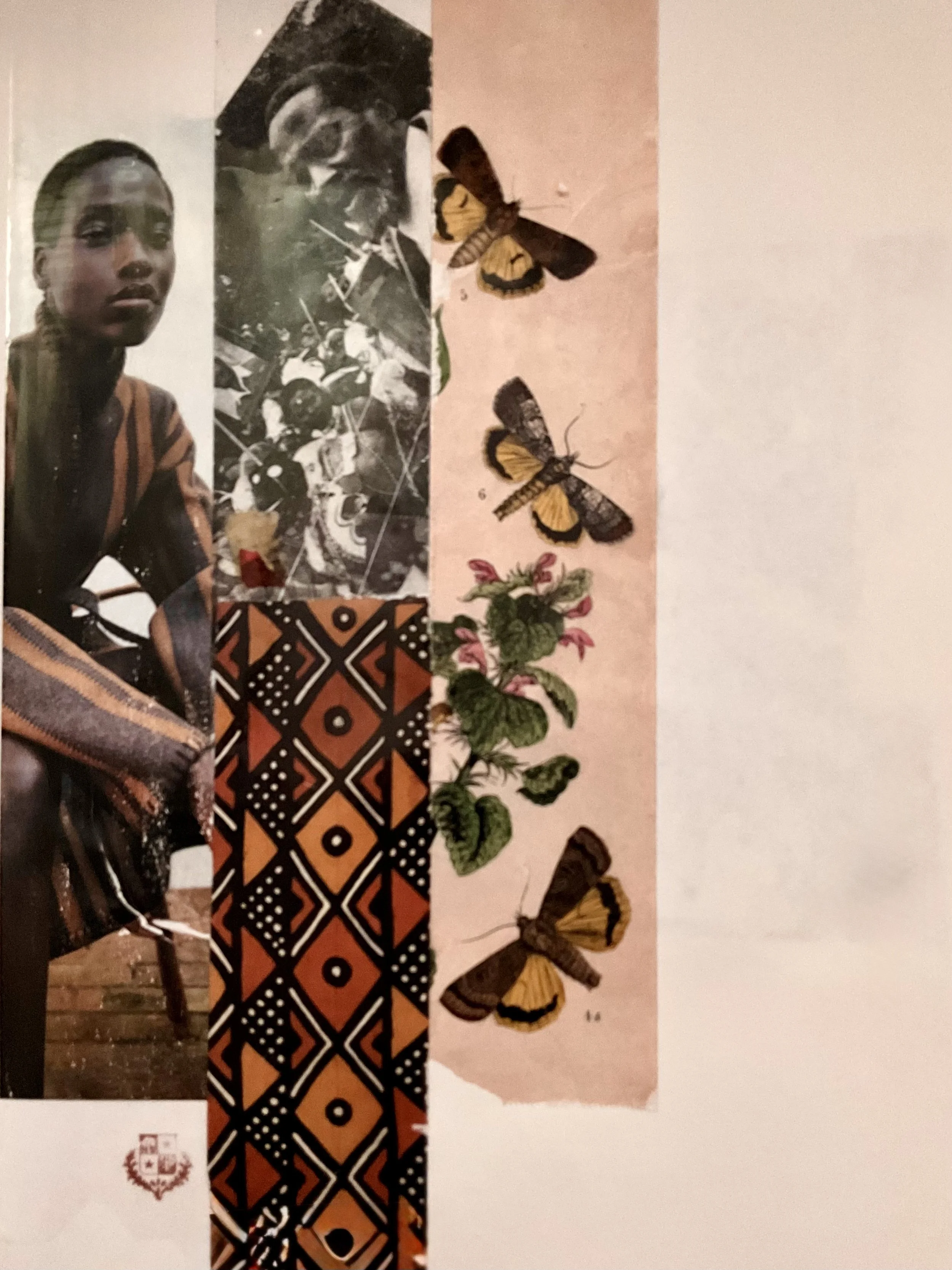
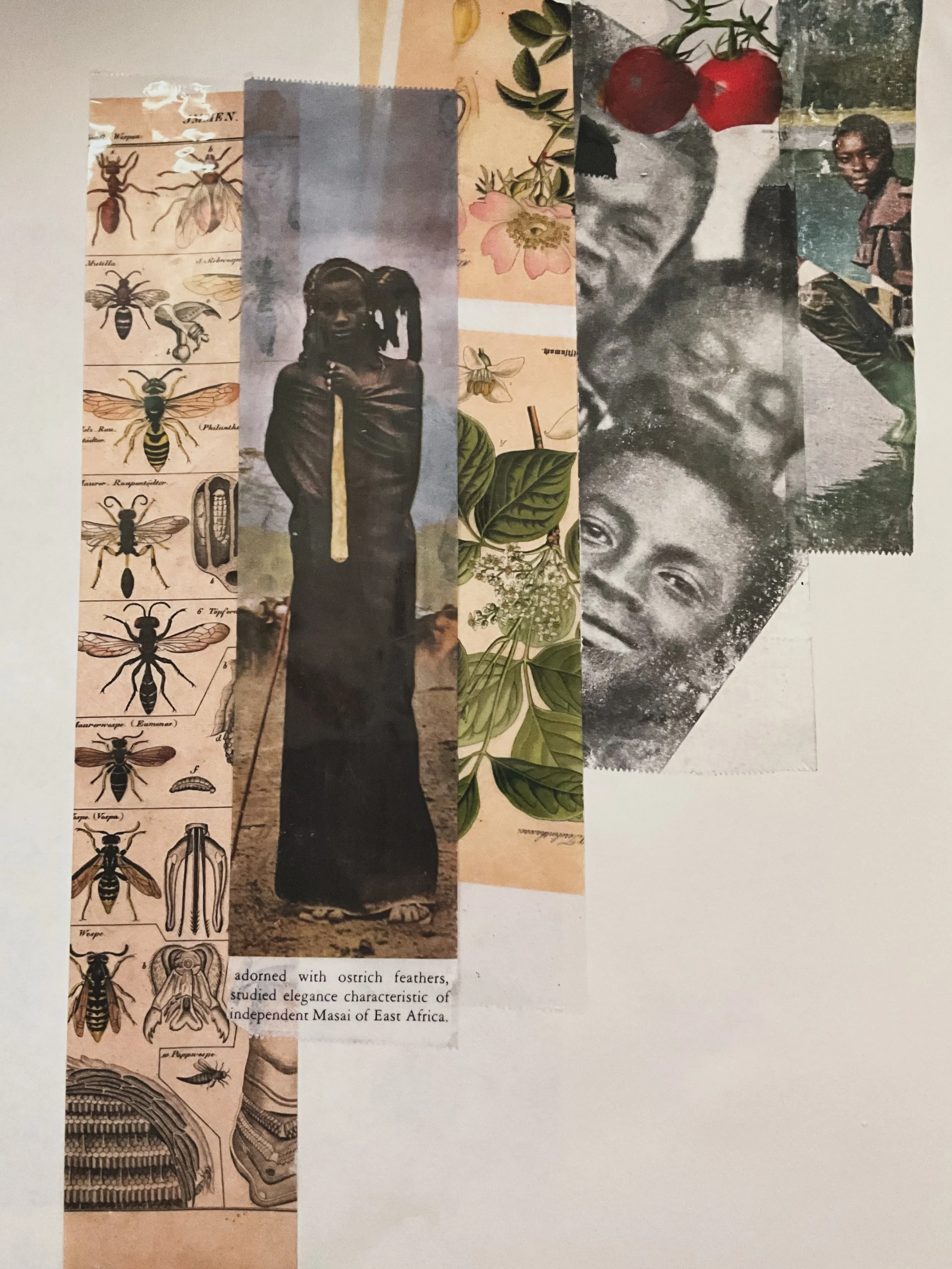
I have started building these compositions in vertical strips, almost like archaeological cores pulled from the earth. Each column contains its own language: botanical illustrations, entomological studies, archival photographs, African textiles, fruit, flowers, anonymous faces, and quiet portraits of children whose gaze feels impossibly direct. Rather than blending them into one seamless image, I allow them to remain distinct, asking the viewer to travel between them. Memory rarely arrives as a complete picture. It comes in narrow bands, interrupted by absence.
The insects have become especially important. At first they entered my work through my concern for disappearing pollinators, but they have begun to mean something broader. They are archivists of ecosystems, carrying pollen from one place to another without demanding recognition. In many ways they mirror artists. We gather stories, transport them across generations, and leave behind something capable of blooming long after we are gone. Their presence beside portraits of African children and botanical illustrations begins to suggest an ecology of memory rather than a hierarchy of subjects.
The archival photographs continue to challenge me. I am deeply aware that these are not merely aesthetic objects. They represent lives, histories, colonial archives, ethnographic collecting, and complicated systems of looking. I find myself asking how to approach these images with tenderness instead of ownership. My intention is not to speak for them but to allow them to remain witnesses within a larger conversation about resilience, migration, survival, and beauty. Their eyes refuse to become anonymous, even when history attempted to make them so.
What surprises me most are the small interruptions. Two tomatoes floating where eyes should be. A single flower cutting through monochrome faces. Butterflies hovering beside geometric textiles. These moments introduce a quiet surrealism that feels closer to memory than documentation ever could. They remind me that healing is rarely linear. Identity is assembled from contradictions: science beside folklore, portrait beside specimen, grief beside abundance.
I have intentionally left large portions of the paper empty as iWork page by page piece by pice creating a rhythm of curiosity. In the past I would have rushed to fill every inch, believing completion meant density. Now I understand that negative space is part of the composition. It offers room for breathing, drawing, stitching, cyanotype chemistry, gold leaf, or perhaps nothing at all. The untouched paper acknowledges that every archive is incomplete and every story contains silence.
These collages are becoming less about creating finished artworks and more about building a visual vocabulary for the larger body of work that is emerging. They feel like field notes from an expedition into my own artistic language. Each strip is an experiment in relationship between nature and humanity, history and imagination, documentation and intuition. I suspect they are teaching me something long before I understand what that lesson is. And perhaps that is exactly where meaningful work begins: not with certainty, but with careful attention to what insists on staying in the room.