HELLAH HORRAH: THE MYTHOLOGICAL HORROR ORACLE : Nope
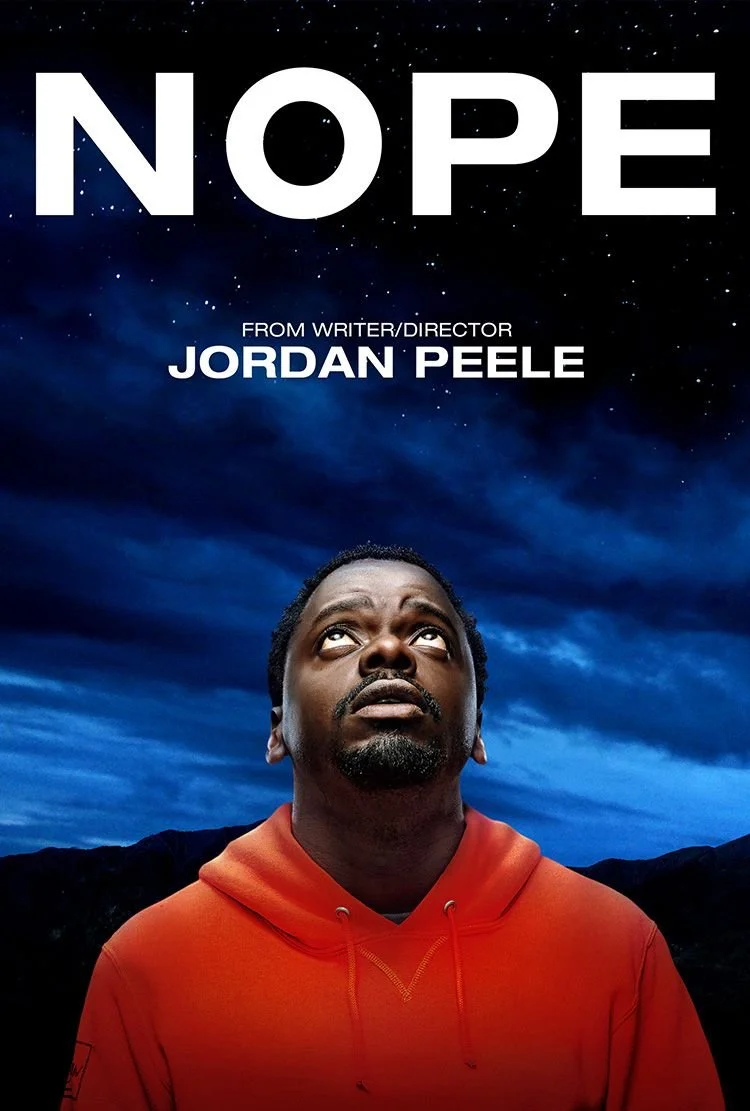
Descent: Nope
by Jordan Peele
Tarot Card: The Star — Reversed (Spectacle, Consumption, False Hope)
Nope doesn’t whisper.
It stares back.
This is a film about looking, who looks, who gets looked at, who survives being seen. Peele takes the promise of the Star (hope, guidance, transcendence) and flips it upside down until it becomes a warning: not everything that shines wants you alive.
The ranch sits under an open sky that feels biblical. Vast. Indifferent. A place where myth used to be navigation and is now bait. The horror here isn’t invasion — it’s appetite. The sky doesn’t descend to punish. It consumes because that’s what it does.
Enter Daniel Kaluuya as OJ — a man raised to manage animals, not spectacle. His power is restraint. Silence. Knowing when not to perform. He understands the oldest rule of survival: don’t challenge a predator’s gaze. He is anti-Star energy — grounded, unflashy, refusing to turn survival into content.
Then there’s Keke Palmer as Emerald — charisma incarnate, joy with hustle, the sparkle that knows how to sell the story. She is the Star upright: radiant, resilient, magnetic. And Peele doesn’t punish her for it — he tests whether brightness can exist without being devoured.
And Jupe… whew. Steven Yeun gives us the most devastating lesson in the film. Jupe mistakes survival for mastery. He lived through one spectacle and assumed it meant he could tame the next. That’s the Star reversed in human form — believing attention equals control. Turning trauma into a theme park. Feeding the thing that spared you once and thinking that makes you chosen.
It doesn’t.
The creature — Jean Jacket — isn’t a UFO. It’s an ancient god misread as entertainment. A sky-dweller mistaken for technology because we can’t accept divinity without ownership. This is myth before language. This is Jonah without the sermon. This is Icarus warned and ignored.
The Star reversed asks:
What are you chasing that is already eating you?
Who profits from being seen?
When does hope become hunger?
Nope says the quiet part out loud:
The spectacle doesn’t care if you’re famous.
It doesn’t care if you’re right.
It only cares if you look.
Final Hellah oracle:
Don’t feed what already watches you.
Don’t confuse survival with permission.
Some lights aren’t guides.
They’re lures.
And sometimes the bravest word in the face of the sky is simply
Nope.
— Hellah