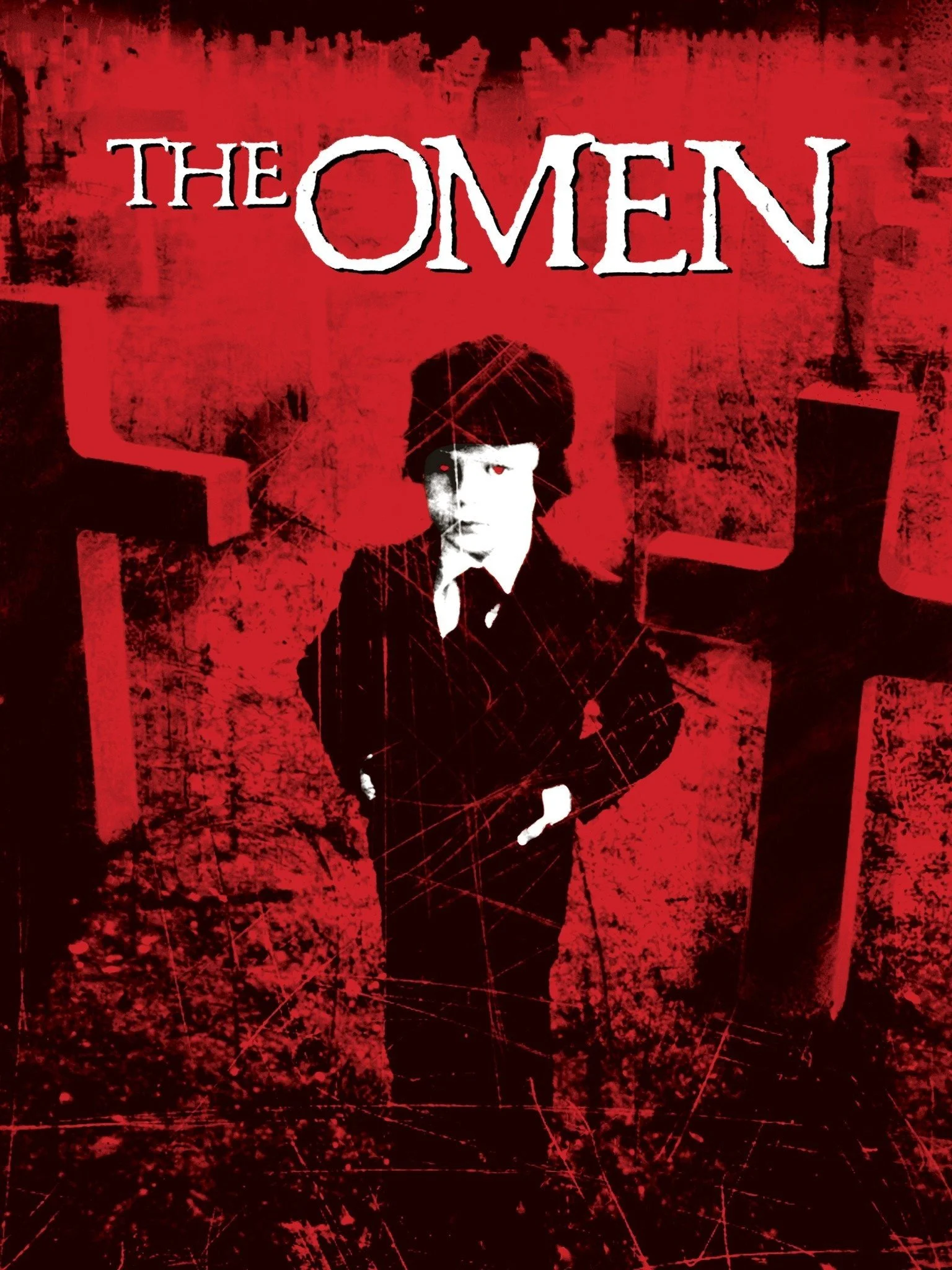
Hellah Horrah Presents | The Omen
Damien’s Playground: The Beast is in the Ballot
Boooo-ha-ha-ha, my ghastly cinephiles! Hellah Horrah here, your Mistress of the Dark Arts and Even Darker Punchlines, opening the velvet curtain on The Omen (1976)—where the Antichrist wears knee socks, the nanny brings party favors you can’t return, and every wide shot is basically a campaign poster for the End Times.
Let’s get one devilish thing straight: this is a movie about a child… and about adults who keep smoothing his hair, setting his schedule, and explaining away the apocalypse because the optics look good. (Sound familiar? Shhh. This is about the movie. Yeah, this is about the movie.)
Damien isn’t throwing normal toddler tantrums—he’s running a shadow cabinet. He’s got a loyal communications team of Rottweilers, a chief-of-staff governess (the iron-lunged Mrs. Baylock) who could out-spin any press secretary, and a knack for turning photo ops into obituaries. The famous birthday scene? That’s not a meltdown. That’s a launch. Balloons, smiles, and—“It’s all for you, Damien!”—a chilling pledge of allegiance in midair. Vote by eerie mail, anyone?
What makes the 70s original so rewatchable is its restraint. Director Richard Donner serves quiet dread with silver-service precision. The horror blooms in polite rooms: mahogany offices, manicured gardens, and churches with very pointy weather vanes. You’ll cackle, you’ll gasp, and you’ll glance at every family portrait in your house like it’s plotting your downfall.
Why you’ll keep pressing “play” (and then “pray”)
The slow creep: Watch how Damien’s “accidents” evolve from unnerving to orchestrated. The tricycle isn’t a toy—it’s a policy initiative on wheels.
Mrs. Baylock’s bedside manner: She doesn’t protect a child; she protects a platform. Every “no” from her lands like a filibuster.
That zoo trip: The baboons don’t just panic. They organize. It’s a protest march with fur.
Priestly warnings: When Father Brennan shows up, the sky starts writing angry emails. Lightning doesn’t strike twice—it drafts legislation.
The photo foreshadowing: Keep a hawk-eye on those “glitches” in the photographer’s prints. They’re not scratches; they’re polling lines pointing straight to doom.
A rewatcher’s hex-list: tiny omens to clock
Dogs on the margins: They appear like security details, then quietly reposition the scene’s power.
Eyes and angles: Note how cameras catch Damien looking up through his lashes—innocence posed like a campaign ad.
Ceremony gone sideways: Christenings, birthdays, hospital visits—whenever adults try to perform normalcy, something votes “nay.”
Glass and reflections: Mirrors and windows hold secrets a beat longer than they should, as if the frame is counting to six… six… six.
Sound cues: Jerry Goldsmith’s choral stabs arrive like gavel bangs—each “Ave Satani” is parliamentary procedure for panic.
Red, interrupted: Track pops of red (yes, the tricycle). They’re visual signatures—a devil’s highlighter pen.
Mrs. Baylock’s gaze: When she looks at Damien, it’s not affection—it’s agenda.
“But Hellah, is this movie… political?”
Only in the way a thunderclap is weather. The Omen shows how power smiles for cameras while something feral paces just out of frame. It isn’t wagging a finger; it’s raising an eyebrow—and in a 70s thriller that eyebrow is sharper than a lightning rod. The film whispers that evil rarely kicks down the door; it’s invited in, offered tea, and given a corner office. Again: this is about the movie. (…mostly.)
So pour a goblet of something crimson, dim the lights, and let the film teach you how to read a room—and a photograph, and a birthday cake. Rewatch it and you’ll see the Beast’s “habits” are really habituations: tiny, repeatable moves that turn a nursery into a war room and a family into a front page.
See you in the shadows, my pretties.
—Hellah Horrah 👻🖤
And remember: horror is closer than you think…