The Sergeant’s Daughter | Chapter Three

Chapter Three

The Observer’s Breath

Today, the air felt lighter, as if it had finally agreed to let me move without pushing back. My chest—once a tight, bound knot of thoughts, deadlines, and silent worries—began to loosen, not all at once, but in slow, almost imperceptible clicks. The kind you feel more than hear.

I became the observer, not the driver. The colors, the sounds, the textures of the day moved around me, like water finding its way over smooth stones. In faces I saw joy—raw, unposed joy—like the curve of a smile between two people who have learned to rest in each other’s company without explanation. I didn’t need to own it; I only needed to witness.

Even the roar of engines at the monster truck arena became a meditation, the low growl and sudden bursts of sound vibrating deep into my bones. The crowd’s cheers pulsed through me like ancient drumbeats. It was not chaos. It was frequency—low, grounding, and alive.

Later, I found myself walking into the familiar creative hum of RedLine. High Walls loomed not as barriers but as canvases of resilience, each mark of ink or paint a push against confinement. My breath followed the arc of color, the looping letters, the drip of paint sliding toward the floor. I could hear the rhythm in it—human hands moving with the tempo of a heartbeat that refuses to be forgotten.

In between, there was sky. A house mid-birth, wooden ribs catching the soft flare of sunset. The light spilled like honey, and I thought: this is how a moment becomes bigger than the moment.

Tonight, I soak in all of it. The vibrations of voices, engines, paint strokes, and laughter swirl in me, like a tide lifting me higher, softer. I meditate in sound, not in silence. Every frequency a reminder: I can rise without running, I can float without leaving, I can watch without holding.

And tomorrow—tomorrow I will manifest even better. Not because today lacked, but because the surface is not the ceiling. I am still learning how to levitate.
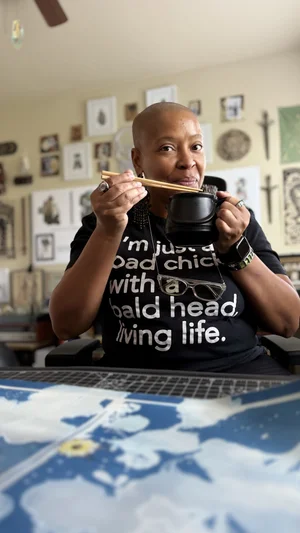
Tya Alisa Anthony

Tya Alisa Anthony is an American artist, photographer, writer, and independent curator whose work explores memory, mythology, ancestry, and the quiet ways people leave themselves behind in the objects they touch. For more than twenty years, her practice has existed at the intersection of visual research, education, and cultural storytelling, investigating resilience through the body, the landscape, historical archives, and the natural world.

Working across photography, collage, cyanotype, botanical collections, handmade books, and mixed media, Anthony approaches each body of work as an evolving archive rather than a finished statement. She is drawn to weathered photographs, heirlooms, medicinal plants, folklore, ritual objects, forgotten architecture, and the symbolic language that connects cultures across time. Her work asks how identity is preserved, transformed, and remembered.

Alongside her studio practice, Anthony has spent more than two decades building educational programs, exhibitions, and community-centered initiatives that expand access to the arts. Her leadership has helped shape institutions, mentor emerging artists, develop sustainable systems, and create spaces where creativity becomes a lifelong practice rather than a privilege.

Anthony’s artwork is included in the permanent collections of the Denver Art Museum and the Museum of Contemporary Art Denver’s Octopus Collection. Her work has been exhibited nationally and is held in numerous private collections.

She is currently creating Organic Tarot, a 78-card hand-collaged tarot deck and accompanying memoir that intertwines mythology, autobiography, botanical symbolism, and the archetypal journey of transformation. The project reflects the central thread running throughout her career: that art is not simply something we make—it is a way of understanding ourselves, preserving what matters, and leaving a map for those who come after us.

http://www.tyaanthony.com
Previous
Previous

Not Strange at All: The Body

Next
Next

The Sergeants Daughter | Chapter Two