Hellah Horrah Presents: “Witch’s Night Out (1978)” – Glitter, Ghouls & the Grooviest Magic Hour
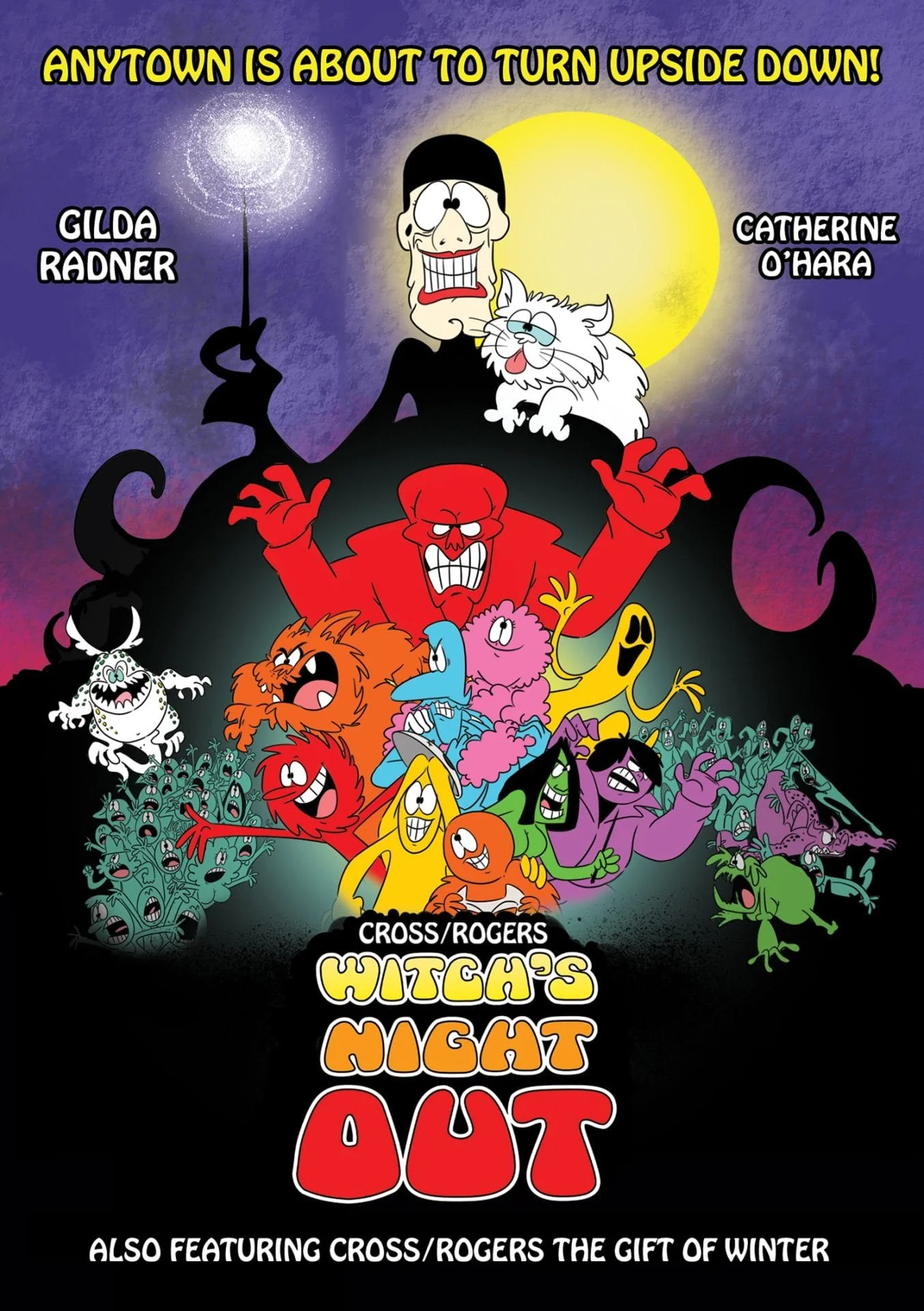
The seventies had a sound—you could hear the orange lighting. “Witch’s Night Out” captured that vibe in every flicker of its hand-drawn glow. The animation shimmered like it had been dipped in disco dust—thick black outlines, electric pinks and greens pulsing like they were plugged into a lava lamp. I swear even the shadows had glitter in them.

Our witch—voiced by the legendary Gilda Radner—wasn’t your broom-closet cliché. She was glamorous and weird and lonely in the best way, a woman out of step with her world until she finds two kids who just want to feel spooky. That’s when the magic hits—literally—and the animation bursts into a swirl of smoke, transformation, and love for misfits everywhere.

My big brother would sing along when the theme came on, making up words like, “Spooky nights and pumpkin lights, Hellah’s got the fright!” “Halloween, Witches and Maaagic!” Sounded like witchy maaagic. He’d dance across the living-room carpet with a pillowcase cape while I clutched my plastic wand from Woolworths. We didn’t have much, but that night felt like technicolor luxury.

And the candy? Mary Janes and those orange-wrapped peanut chews nobody liked but us. The witch told us that being different was its own kind of spell. And maybe that’s what the seventies were trying to teach: a little sparkle in the shadows never hurt nobody.
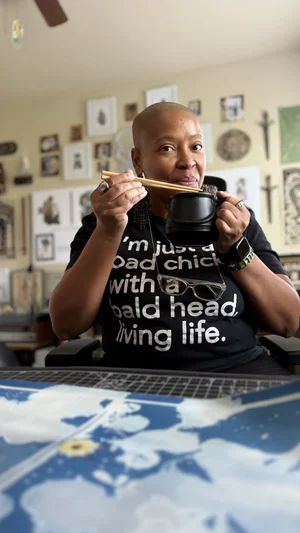
Tya Alisa Anthony

Tya Alisa Anthony is an American artist, photographer, writer, and independent curator whose work explores memory, mythology, ancestry, and the quiet ways people leave themselves behind in the objects they touch. For more than twenty years, her practice has existed at the intersection of visual research, education, and cultural storytelling, investigating resilience through the body, the landscape, historical archives, and the natural world.

Working across photography, collage, cyanotype, botanical collections, handmade books, and mixed media, Anthony approaches each body of work as an evolving archive rather than a finished statement. She is drawn to weathered photographs, heirlooms, medicinal plants, folklore, ritual objects, forgotten architecture, and the symbolic language that connects cultures across time. Her work asks how identity is preserved, transformed, and remembered.

Alongside her studio practice, Anthony has spent more than two decades building educational programs, exhibitions, and community-centered initiatives that expand access to the arts. Her leadership has helped shape institutions, mentor emerging artists, develop sustainable systems, and create spaces where creativity becomes a lifelong practice rather than a privilege.

Anthony’s artwork is included in the permanent collections of the Denver Art Museum and the Museum of Contemporary Art Denver’s Octopus Collection. Her work has been exhibited nationally and is held in numerous private collections.

She is currently creating Organic Tarot, a 78-card hand-collaged tarot deck and accompanying memoir that intertwines mythology, autobiography, botanical symbolism, and the archetypal journey of transformation. The project reflects the central thread running throughout her career: that art is not simply something we make—it is a way of understanding ourselves, preserving what matters, and leaving a map for those who come after us.

http://www.tyaanthony.com
Previous
Previous

Hellah Horrah: “Scooby-Doo and the Headless Specter” – Haunted Mansions, Funky Fears, & the Groove of Mystery

Next
Next

Hellah Horrah: “It’s the Great Pumpkin, Charlie Brown” – Soft Light, Sad Jazz, & Candy Corn Dreams